The fear is universal.
From New York to Tokyo, Berlin to São Paulo, from corporate skyscrapers to remote home offices, millions of workers are asking the same question:
“Will AI replace my job?”
The rise of artificial intelligence—especially large language models, automation platforms, and AI-driven decision systems—has sparked the greatest global employment debate since the Industrial Revolution. But unlike past technological disruptions that replaced primarily physical labor, AI is now targeting white-collar jobs, knowledge work, and professional roles once considered “safe.”
Accountants, analysts, lawyers, consultants, HR specialists, marketers, copywriters, project managers, financial advisors, and even educators are facing transformation. The fear isn’t irrational: AI is already performing tasks that took humans hours—sometimes days—in seconds.
But beneath the fear lies a deeper, more complicated truth.
AI is not simply replacing jobs; it is reshaping them.
It is forcing humanity to rethink the meaning of work, value, and expertise.
In this article, we take a global, deeply analytical, and human-centered look at:
-
which white-collar jobs AI is most likely to replace
-
which ones AI cannot replace
-
how corporations are using AI right now
-
what the next 5–10 years will look like
-
how workers across different countries will be impacted
-
what skills are needed to thrive in this new world
-
and why the future may be more hopeful than frightening
Let’s begin.
Understanding White-Collar Jobs: Why AI Targets Knowledge Work First
For decades, automation threatened physical labor—manufacturing, logistics, production lines. Machines replaced muscle. Robots replaced repetitive tasks. But white-collar work felt untouchable. It required intelligence, creativity, communication, expertise—qualities we believed only humans possessed.
That changed when AI learned to think, not just compute.
AI now:
-
analyzes spreadsheets
-
drafts emails
-
writes reports
-
generates legal documents
-
interprets data
-
builds slide decks
-
writes code
-
summarizes meetings
-
and acts as an always-on digital assistant
Suddenly, the office worker’s daily workflow is replicable.
Why AI is perfect for white-collar tasks
White-collar jobs involve:
-
processing information
-
making structured decisions
-
writing and editing
-
analyzing patterns
-
interpreting rules
-
generating solutions
And AI excels at all of these.
Types of white-collar jobs most exposed
Here are the 10 global job categories most impacted by AI:
-
Administrative assistants
-
Customer service and call centers
-
Data analysts and junior financial analysts
-
Accountants and bookkeepers
-
HR coordinators
-
Paralegals and legal researchers
-
Marketing and content writers
-
Project coordinators
-
Tech support specialists
-
Remote office workers performing repetitive tasks
These roles involve a high volume of predictable, repeatable workflow—prime territory for automation.
But not all white-collar jobs are equally exposed.
Some will barely change at all.
The Rise of AI Automation: How Companies Are Replacing or Reshaping Office Roles
Corporations around the world are already using AI systems to automate significant parts of their operations. This isn’t a prediction—it’s reality.
Here’s how global businesses are using AI today.
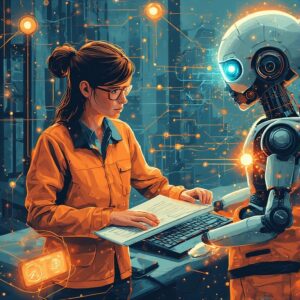
1. Administrative Automation
AI tools handle:
-
scheduling
-
email drafting
-
meeting summaries
-
document creation
-
note-taking
-
internal communications
This reduces the need for entry-level administrative staff.
2. Accounting & Finance Automation
AI systems can now:
-
categorize transactions
-
detect anomalies
-
reconcile accounts
-
forecast budgets
-
prepare standard financial reports
A job that once required large teams can now be done by smaller, AI-assisted groups.
3. Customer Service & Helpdesk Automation
AI chatbots and voice bots now handle:
-
customer inquiries
-
billing questions
-
troubleshooting
-
refund requests
Companies like banks, telecom firms, airlines, and e-commerce giants have replaced thousands of support employees with AI.
4. HR & Recruitment Automation
AI performs:
-
resume screening
-
candidate scoring
-
onboarding workflows
-
policy explanation
-
internal knowledgebase responses
HR departments in Europe and the U.S. report 30–50% administrative reduction thanks to AI tools.
5. Legal Automation
AI platforms assist with:
-
contract drafting
-
legal research
-
risk evaluation
-
clause detection
-
compliance summaries
Law firms in the U.K., India, and Canada now automate nearly 40% of junior-level legal tasks.
6. Marketing & Content Creation
AI now:
-
writes blog posts
-
drafts social ads
-
generates scripts
-
designs creatives
-
performs SEO optimization
This is one of the most disrupted white-collar sectors globally.
AI doesn’t eliminate jobs instantly—but it reduces the need for large teams doing repetitive white-collar tasks.
Jobs Most at Risk: The 2025–2030 Global Ranking of AI-Exposed Professions
McKinsey, OECD, and World Economic Forum report similar findings:
AI will impact 300+ million white-collar jobs worldwide.
Here’s the global risk ranking:
1. Administrative & Secretarial Jobs — Very High Risk
AI directly automates:
-
scheduling
-
email handling
-
report formatting
-
record keeping
Many corporations in India, the U.S., and Europe already replaced 20–40% of admin roles.
2. Accounting & Bookkeeping — High Risk
ML models handle:
-
ledgers
-
expense classification
-
invoice scanning
-
financial summary drafts
Small firms worldwide are shifting to AI bookkeeping systems.
3. Customer Support & Call Centers — Very High Risk
AI voice systems now achieve human-like accuracy.
Countries like the Philippines and India may face major disruption.
4. Junior Analyst Roles — High Risk
AI analyzes data faster, cheaper, and often more accurately.
But senior analysts remain essential for interpretation.
5. Paralegals & Legal Assistants — High Risk
AI legal assistants extract data from thousands of cases in seconds.
6. Marketing & Content Production — Medium to High Risk
AI now produces professional-quality:
-
articles
-
social media content
-
SEO drafts
-
ad scripts
-
visual assets
But strategic creativity still requires humans.
7. Middle-Management Routine Roles — Medium Risk
Managers who only coordinate workflows face rising automation risk.
AI doesn’t just take tasks—it takes layers of professional hierarchy with it.
Jobs That AI Cannot Replace: The Professions That Remain Human-Centered
Despite the fear, AI has clear limitations.
There are jobs where human qualities—empathy, persuasion, creativity, trust, ethical judgment—remain irreplaceable.
1. Leadership & Executive Roles
AI cannot:
-
negotiate political tension
-
inspire teams
-
create corporate vision
-
lead organizations through uncertainty
Leadership is deeply human.
2. Psychological, Emotional & Social Professions
Therapists, psychologists, social workers, teachers, and mediators operate in the emotional dimension, not purely informational.
AI can support—never replace.
3. Creative Strategy & High-Level Artistry
While AI can generate, it cannot originate meaning, taste, or philosophy.
Writers, filmmakers, designers, musicians remain essential.
4. Skilled Negotiators
Diplomacy, high-level sales, political communication—these require intuition, reading body language, cultural intelligence.
5. Complex Problem-Solving Roles
Experts in medicine, engineering, architecture, and scientific research use AI as a tool—not a replacement.
6. Jobs requiring physical presence + intellectual judgment
Surgeons, pilots, judges, senior consultants all fall into this category.
The future is not “AI replacing humans”—it is AI amplifying humans where human value truly matters.
The Hybrid Future: Why Most Jobs Will Not Be Replaced—But Transformed
The real story is not job destruction—it’s job evolution.
AI won’t replace most white-collar workers.
Workers who use AI will replace those who don’t.
This new “hybrid workforce” blends:
Human strengths:
-
empathy
-
judgment
-
creativity
-
ethics
-
social intelligence
-
intuition
AI strengths:
-
speed
-
pattern recognition
-
automation
-
data analysis
-
consistency
-
memory
Together, they form a Human + AI workforce model.

Where this hybrid future already exists
-
U.S. tech companies using AI co-pilots
-
Japanese corporations using AI for workforce augmentation
-
European firms using AI to reduce repetitive labor
-
Middle Eastern companies adopting digital transformation in banking
-
Asian megacities using AI to optimize logistics and customer service
The Future Skills Workers Must Master
1. AI literacy
2. Prompt engineering
3. Critical thinking in AI-assisted workflows
4. Creativity and conceptual thinking
5. Adaptability & continuous learning
6. Algorithmic collaboration
Workers who embrace these skills will thrive—not vanish.
The Global Impact: How AI Will Affect Jobs in the U.S., Europe, Asia & the Developing World
AI’s impact isn’t equal everywhere.
Different regions face different challenges and opportunities.
1. United States
-
rapid AI adoption
-
high disruption in admin, finance, tech
-
new AI-driven jobs in innovation & data
U.S. jobs will shift dramatically but not disappear completely.
2. Europe
-
slower adoption due to regulation
-
strong worker protections
-
focus on hybrid models vs replacement
Europe will preserve more white-collar jobs.
3. Asia
Asia will face the most disruption:
-
high-density white-collar outsourcing
-
large customer support sectors
-
companies aggressively adopting AI tools
India and the Philippines especially face major transformation.
4. Developing Countries
Emerging markets depend heavily on:
-
administrative outsourcing
-
back-office operations
-
offshore services
AI threatens large segments of these economies.
But also creates new digital opportunities.
Vulnerability of White-Collar Jobs to AI (Score by Region)
| Job Category | U.S. | Europe | Asia | Global Risk Level |
|---|---|---|---|---|
| Data Analysis | ⭐⭐⭐⭐ | ⭐⭐⭐ | ⭐⭐⭐⭐⭐ | High |
| Accounting | ⭐⭐⭐⭐⭐ | ⭐⭐⭐⭐ | ⭐⭐⭐ | High |
| Legal Research | ⭐⭐⭐⭐ | ⭐⭐⭐⭐ | ⭐⭐⭐ | Medium |
| Marketing & Content | ⭐⭐⭐⭐ | ⭐⭐⭐ | ⭐⭐⭐⭐ | High |
| HR & Admin | ⭐⭐⭐⭐⭐ | ⭐⭐⭐ | ⭐⭐⭐⭐ | Very High |
| Creative Strategy | ⭐⭐ | ⭐⭐ | ⭐⭐ | Low |
FAQ Section
1. Will AI truly replace white-collar jobs worldwide?
AI will replace tasks, not entire professions—but millions of workflows will change.
2. Which jobs are most at risk?
Administrative, accounting, customer service, junior analyst, and repetitive legal roles.
3. Can AI replace knowledge workers entirely?
No. AI lacks judgment, ethics, empathy, and real-world reasoning.
4. How should workers prepare?
By mastering AI literacy, creative skills, strategic thinking, and hybrid workflows.
5. Which countries will face the biggest impact?
Asia (due to outsourcing industries), then the U.S., then parts of Europe.
6. Will AI create new jobs?
Yes—AI will create millions of jobs in AI development, oversight, compliance, training, and human-AI collaboration.
7. What is the long-term future of the global workforce?
A hybrid future: humans making decisions, AI doing the heavy computational work.
The Future of Human Work in the Age of AI
AI is not the end of work.
It is the end of one kind of work—and the beginning of a new era.
The global workforce is at a crossroads. For the first time, machines can read, write, analyze, solve, design, and even create. Fear is natural. Change is uncomfortable. But history shows that humanity always rises—not by resisting change, but by evolving with it.
AI will challenge millions of workers. But it will also:
-
open new industries
-
enable global creativity
-
automate painful tasks
-
free humans for meaningful work
-
expand opportunity across continents
The future belongs not to AI alone, and not to humans alone, but to those who can combine the two.
The global workforce is not dying—it is transforming.
And the future will be written by those who embrace that transformation, not fear it.