Creativity has always been humanity’s defining spark.
It’s the thing that built civilizations, painted masterpieces, wrote stories that shaped cultures, and invented technologies that transformed our world.
But in 2026, something profound is happening:
Artificial intelligence is no longer just solving equations, automating workflows, or translating languages. It is creating — or at least generating — art, music, stories, poetry, designs, photography, and entire fictional worlds with the tap of a screen.
A machine can now produce:
-
a song in the style of any artist
-
a photorealistic portrait in seconds
-
a poem about heartbreak
-
a movie scene
-
a legendary painting remix
-
a full marketing campaign
-
a book outline
All without ever “feeling” anything.
And so humanity asks a difficult question:
Will AI replace human creativity?
Or will it redefine what it means to be creative?
This beginner-friendly yet deeply philosophical guide explores the ethics, fears, hopes, and complexities behind the future of human creativity in an AI-powered world.
Let’s dive into what machines can do, what humans can still do better, and how the future will reshape art, identity, and innovation.
What Is Human Creativity? (The Essence Machines Still Can’t Touch)
To understand whether AI can replace creativity, we must understand what creativity actually is.
Creativity is not just:
-
generating images
-
arranging words
-
mixing sounds
-
solving visual patterns
Those are outputs, not essence.
Human creativity is:
-
meaning
-
memory
-
lived experience
-
emotional scars
-
cultural background
-
imagination born from struggle
-
the ability to connect unrelated ideas
-
the need to express what cannot be explained
-
a reflection of identity and consciousness
AI cannot feel heartbreak.
AI cannot miss someone.
AI cannot experience hunger, fear, grief, hope, or love.
AI cannot remember the excitement of childhood.
These shape human creativity.
These make art human.
AI generates.
Humans create.
And the difference is more meaningful than it seems.
AI rearranges patterns learned from millions of artworks.
But it does not know why humans create art in the first place.
It cannot feel the weight of a blank canvas.
It cannot fear failure or crave expression.
It cannot seek meaning or tell a story from the inside.
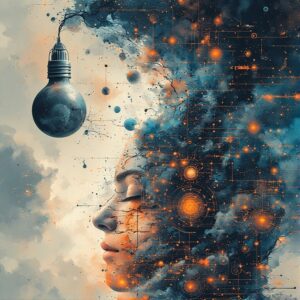
Human creativity is driven by inner worlds machines don’t have.
What AI Is Good At (And Why It Looks Like Creativity)
Despite lacking emotional depth, AI is extremely good at things that look like creativity.
AI excels at:
-
pattern recognition
-
remixing styles
-
generating new combinations
-
brainstorming ideas
-
creating visual variations
-
polishing artistic output
-
enhancing speed and scale
AI can produce 100 design variations in seconds.
Humans cannot.
AI can analyze millions of artworks.
Humans cannot.
This leads many to assume:
“AI is more creative than humans.”
But that’s only partially true.
AI creativity = fast, structured, pattern-driven
Human creativity = slow, emotional, meaning-driven
Both have strengths — and weaknesses.
What AI Cannot Do
-
Understand cultural trauma
-
Experience a moment of inspiration
-
Express personal identity
-
Break rules with intention
-
Create from pain, joy, or love
-
Understand meaning beyond patterns
AI does not choose to create.
It does not want anything.
It simply generates based on statistical probabilities.
It is a mirror — not a mind.
Ethical Concerns — Is AI Replacing Artists or Liberating Them?
This is where things get complicated.
AI democratizes creativity.
But democratization can be both empowering and threatening.
Concern #1 — Job Replacement
Many designers, illustrators, copywriters, musicians, and photographers fear losing work.
Why hire an artist if AI can do it faster and cheaper?
This fear is real — especially for:
-
freelance designers
-
concept artists
-
commercial illustrators
-
low-budget marketing jobs
-
repetitive content roles
But AI replaces tasks, not identity.
Great artists are valued not for speed, but for vision and depth.
Concern #2 — Style Theft
AI models have been trained on millions of artworks — often without permission.
This raises ethical questions:
-
Is it fair to mimic an artist’s style?
-
Who owns the output?
-
Should artists be compensated?
Laws are evolving, but the ethical dilemma remains.
Concern #3 — Authenticity Crisis
If anyone can generate “beautiful art” instantly, does beauty lose meaning?
If everything can be created, what makes something valuable?
Here’s a tough truth:
When creativity becomes easy, authenticity becomes rare.
And rare things become valuable.
This means human creativity may actually become more valuable — not less.
Concern #4 — Creative Dependency
If humans rely too much on AI for ideas, imagination weakens.
If AI becomes the default creative engine, humans risk mental laziness.
Breaking creativity is easy.
Rebuilding it is hard.
AI must be used as a tool — not a replacement for imagination.
Human Identity in an AI-Generated World
This is one of the deepest ethical questions of our time.
If AI can write stories…
What makes a writer?
If AI can compose music…
What makes a musician?
If AI can generate art…
What makes an artist?
If AI can innovate…
What makes a creator?
The more AI creates, the more humans must ask:
“What does it mean to be me?”
This question has no machines involved — only humanity.
Creativity is personal. AI is impersonally powerful.
Human creativity is shaped by:
-
childhood memories
-
traumas
-
beliefs
-
culture
-
philosophy
-
love
-
pain
-
desire
-
curiosity
AI cannot have these.
AI cannot become these.
Human identity comes from the inside.
AI creation comes from the outside.
The Future of Art and Innovation — Competition or Collaboration?
The future is not about replacement.
It’s about collaboration.
The most successful creators of the future will be:
Human + AI = Augmented Creators
Artists with AI will outperform artists without AI — not because AI is better, but because AI expands human imagination.
AI Enhances:
-
speed
-
brainstorming
-
technical execution
-
idea exploration
-
complex visualization
Humans Provide:
-
meaning
-
intention
-
emotional depth
-
originality
-
narrative heart
Together, they become more than the sum of their parts.
AI is a co-pilot — not the pilot.
Three Future Scenarios — Optimistic, Neutral, and Dark
Let’s imagine what 2030 may look like.

Scenario A — Creative Renaissance (Optimistic)
-
Anyone can create
-
Artists have superpowers
-
Innovation explodes
-
Creativity becomes the universal language
-
Human meaning + AI capability = new art forms
This is the best-case future.
Scenario B — Standardized Innovation (Neutral)
-
AI becomes a tool like Photoshop
-
Creativity is efficient but predictable
-
Artists adapt and evolve
-
The world adjusts
Most likely future.
Scenario C — Collapse of Originality (Dark)
-
Content overload
-
Human creativity becomes rare
-
Authentic art loses space
-
Creativity becomes passive instead of active
-
Identity collapses under algorithmic influence
A cautionary scenario — but not inevitable.
Human Creativity vs AI Creativity (2026 Analysis)
| Aspect | Human Creativity | AI Creativity | Winner |
|---|---|---|---|
| Emotion | Deep & real | Simulated | Human |
| Originality | Lived experience | Pattern-based | Human |
| Speed | Slow | Instant | AI |
| Meaning | Central | Absent | Human |
| Consistency | Variable | Perfect | AI |
| Innovation | Intentional | Statistical | Depends |
| Skill Barrier | High | Low | AI |
| Vision | Internal identity | External output | Human |
| Adaptation | Conscious & emotional | Structural | Human |
FAQ
1. Will AI replace artists?
AI will replace repetitive creative tasks — not artists with vision and identity.
2. Can AI produce real art?
AI produces aesthetic output, but “art” requires human intention and meaning.
3. Does AI weaken human creativity?
Only if we stop practicing creativity. AI can amplify or diminish thinking.
4. Is AI-generated art ethical?
It depends on dataset transparency, consent, and copyright laws.
5. Should humans fear AI creativity?
No — but we must use AI consciously, protect human meaning, and develop ethical frameworks.
Conclusion
Creativity is more than production.
It is more than patterns.
It is more than aesthetics.
Creativity is the story of a person.
AI cannot replace the human soul.
But it can amplify human potential in ways no generation before us ever imagined.
The future is not human vs AI.
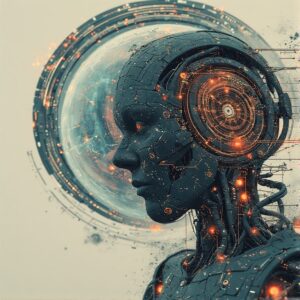
The future is human with AI.
A world where machines generate, but humans imagine.
Where AI accelerates creation, but humans give it heart.
AI may change creativity — but only humans can give creativity meaning.