For decades, the creative industry belonged to teams—video crews, design studios, production houses, marketing agencies, record labels, editorial departments. Creativity was slow, expensive, and dependent on specialized labor. A single person could not dream of competing with a ten-person creative team, let alone a professional studio.
But something changed.
In 2024 and 2025, AI tools became powerful.
In 2025, they became accessible.
And in 2026… they became real-time.
Instant video generation.
Instant music composition.
Instant writing.
Instant design.
All happening at the speed of thought.
Today, one individual with real-time AI tools can ideate, produce, edit, and publish faster than entire professional teams. Not because humans got faster—
but because AI became instantaneous.
The rise of real-time creative AI represents one of the greatest power shifts in the history of content creation. And for the first time ever, a single creator can compete directly with studios, agencies, and production teams.
This is the story of how real-time AI is transforming the creator economy—
and why 2026 is the year solo creators rise to the top.
The Real-Time Creative Revolution: Instant Production Changes Everything
Creativity used to be defined by constraints—time, tools, budgets, and human coordination. You needed designers, editors, animators, sound engineers, writers, and hours of manual work.
Real-time AI shatters all of that.
The Shift From Slow Creation to Instant Production
Traditional creative processes follow this path:
-
Ideation
-
Drafting
-
Production
-
Editing
-
Review
-
Distribution
This workflow takes hours, days, or weeks.
Real-time AI compresses the entire timeline into seconds.
Why Speed Is the New Creative Superpower
Real-time AI changes the rules:
-
Zero waiting time → instant drafts, renders, edits
-
Unlimited iteration → no cost per change
-
Instant feedback loop → ideas evolve rapidly
-
Creative flow stays uninterrupted
-
Experimentation explodes
Creativity is no longer limited by process—it becomes pure expression.
Industries Most Disrupted by Real-Time AI
-
Video production (Runway, Pika, Sora-style systems)
-
Music composition (Suno, Udio, real-time generation models)
-
Writing and editing (Claude, GPT, multi-agent writing stacks)
-
Graphic and brand design (Midjourney, Recraft, Ideogram)
For the first time, creativity moves at the same speed as imagination.
Solo Creators Powered by AI: The New One-Person Studio
The phrase “one-person studio” used to be a metaphor.
In 2026, it’s literal.
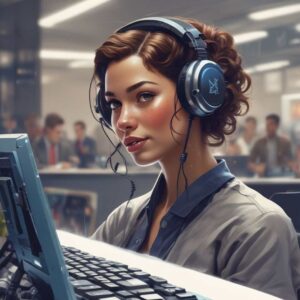
Real-time AI gives individuals access to the capabilities of entire creative departments:
1. AI Writer → Scriptwriter, copywriter, storyteller
A solo creator can generate scripts, captions, articles, and narratives instantly.
2. AI Video Tools → Directors, editors, animators
A single sentence can become a video scene or motion graphic.
3. AI Music Tools → Composer, producer, sound designer
Creators can produce original tracks with no instruments or experience.
4. AI Design Tools → Designers, illustrators, art directors
Branding, thumbnails, illustrations, posters—all generated instantly.
5. AI Agents → A full back-office team
Planning, scheduling, researching, publishing.
A solo creator now manages the entire pipeline:
Idea → Content → Distribution
in minutes, not days.
The Psychological Impact: Creativity Without Barriers
For the first time, people don’t feel “held back” by:
-
lack of experience
-
lack of tools
-
lack of budget
-
lack of time
The only limit is imagination.
How AI Levels the Playing Field: Why Talent Beats Team Size
Creative teams used to win because they had:
-
manpower
-
specialized roles
-
access to expensive tools
-
production pipelines
-
time to revise and polish
Real-time AI erases all these advantages.
1. Speed Beats Size
A solo creator with instant AI tools can publish 10x faster than teams with meetings, handoffs, and review cycles.
2. Creativity Beats Coordination
Teams spend time aligning.
Creators spend time creating.
3. Flexibility Beats Structure
Agencies rely on rigid processes.
Solo creators can pivot instantly.
4. Experimentation Beats Perfectionism
Real-time AI allows infinite testing:
-
try 10 hooks
-
try 20 thumbnails
-
try 5 scripts
-
try 3 video styles
-
find one that works
This experimental advantage is a superpower that teams often lack.
5. Personality Beats Corporate Neutrality
Audiences don’t just want content.
They want authenticity.
They want personality.
They want human connection.
Agencies struggle with this.
Creators thrive in it.
Real-Time Tools Across Industries: Video, Music, Writing, and Design
A solo creator can now operate across multiple creative formats—with professional-level output.
1. Real-Time Video
Tools like:
-
Runway’s real-time editing
-
Pika’s instant animation
-
Luma’s video generation
-
Sora-like predictive pipelines
enable creators to produce scenes that previously required:
-
editors
-
actors
-
lighting
-
cameras
-
set design
-
post-production teams
Now it’s text → video, instantly.
2. Real-Time Music
With Suno and Udio:
-
full songs
-
custom vocals
-
multi-track arrangements
-
genre transformations
are generated in seconds.
Creators without musical training now produce soundtrack-level compositions.
3. Real-Time Writing
Claude and GPT agents can:
-
brainstorm
-
outline
-
research
-
draft
-
edit
-
rewrite with tone
-
fact-check
A process that previously required an editorial team.
4. Real-Time Design
Tools like Recraft, Ideogram, and Midjourney:
-
generate branding
-
create logos
-
design posters
-
produce illustrations
-
deliver infinitely adjustable variations
Real-time AI gives creators the power of entire design agencies.
A New Creative Workflow: From Days to Minutes
Let’s compare a typical workflow before and after real-time AI:
Old Workflow (Team-Based)
-
Brainstorm meeting (60 min)
-
Scriptwriting (3–6 hours)
-
Production planning (2–3 days)
-
Filming (1–3 days)
-
Editing (8–20 hours)
-
Revisions (2–3 rounds)
⏳ Total: 5–14 days
New Workflow (Solo + Real-Time AI)
-
Idea (instant)
-
Script (30 seconds)
-
Video generation (1–3 minutes)
-
Edit + refine (1 minute)
-
Publish (instant)
⏳ Total: 10 minutes
Time collapses.
Barriers disappear.
Output explodes.
Why This Matters
Speed creates:
-
more creativity
-
more opportunities
-
more viral content
-
more iteration
-
more experimentation
-
more learning
-
more success
Creators with real-time AI don’t produce “more content”—
they produce better content, faster.
Can Solo Creators Actually Outperform Teams?
Yes.
And it’s already happening.
Why Solo Creators Win
-
No bureaucracy
-
No meetings
-
No delays
-
Pure creative flow
-
Authentic storytelling
-
Faster adaptation to trends
-
Unlimited experimentation
-
Lower cost
-
Infinite creative variations
Real-time AI gives individuals the advantage of:
Speed
Adaptability
Authenticity
Creative freedom
Agencies simply cannot match this combination.
The Future: Creator-Led Brands
In 2026–2030, we will see:
-
one-person animation studios
-
one-person media companies
-
one-person design agencies
-
one-person record labels
-
one-person movie producers
And they will compete with—and often outperform—professional teams.
Solo Creator + Real-Time AI vs Professional Team
| Feature | Solo Creator + AI | Creative Team |
|---|---|---|
| Speed | Instant | Slow |
| Cost | Very low | Very high |
| Tools | Real-time AI | Manual workflows |
| Output Volume | Extremely high | Limited |
| Flexibility | Total | Restricted |
| Creativity | Unlimited | Role-bound |
| Iteration | Instant | Slow |
| Authenticity | High | Medium |
| Scalability | Huge | Hard |
FAQ
1. Can a solo creator really match a team?
Yes—real-time AI replaces the speed, tools, and workflows of full teams.
2. Does AI reduce creativity?
No—AI removes barriers and allows unlimited experimentation.
3. Is real-time AI professional quality?
Many tools now surpass studio tools in speed and flexibility.
4. Will agencies disappear?
No, but they will reinvent themselves around AI-first pipelines.
5. What’s the biggest advantage of real-time AI?
Speed + iteration → the ultimate creative advantage.
Conclusion
2026 marks the beginning of a new era in creativity.
For the first time in history, one person can do the work of an entire creative team—
and do it faster, cheaper, and in many cases, better.
Real-time AI isn’t just a tool.
It’s a creative multiplier.
A silent studio.
A tireless collaborator.
A digital team that never sleeps.
The future belongs to the bold.
To the curious.
To the individuals who embrace this power.
Because in the age of real-time AI,
a single creator can become a one-person creative powerhouse.