Human Resources has always been about people — but ironically, most HR managers spend their days doing everything except connecting with people. Between sorting through hundreds of resumes, scheduling onboarding sessions, and collecting feedback from employees, the job becomes a sea of repetitive tasks and administrative chaos.
According to a 2024 SHRM study, U.S. HR professionals spend nearly 68% of their time on manual data entry, document processing, and communication follow-ups — the kind of work that’s critical, but not creative.
That’s exactly where Artificial Intelligence (AI) is changing the game.
AI doesn’t replace HR professionals; it augments them. It removes repetitive tasks so HR managers can focus on what truly matters — hiring the right people, engaging new employees, and improving workplace culture.
This guide walks you step-by-step through how modern HR managers across the U.S. use AI to automate resume screening, new hire onboarding, and employee feedback loops — building smarter teams without losing the human touch.
1. Why HR Departments Need AI Now
The HR landscape in the U.S. is evolving faster than ever.
A combination of remote work, talent shortages, and new compliance regulations means HR teams are under pressure to do more with less.
-
The average job posting receives over 250 applications (Indeed, 2025).
-
Turnover rates have climbed by 20% in post-pandemic years.
-
Employee engagement scores continue to drop due to poor feedback processes.
AI-powered HR tools offer a solution: automating what’s repetitive while improving accuracy and fairness.
“AI helps HR managers focus less on paperwork and more on people.”
— Harvard Business Review, 2025
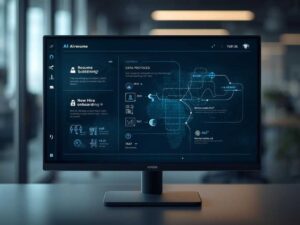
Here’s how each major HR function is being transformed by AI:
2. Automating Resume Screening
The Old Problem
Traditional resume screening is slow and inconsistent.
Recruiters scan hundreds of applications manually, often missing qualified candidates or introducing unconscious bias. The process can take days for just one position.
How AI Fixes It
AI resume screening tools like HireVue, Paradox Olivia, Manatal, and ChatGPT integrations can now:
-
Parse and rank resumes based on job descriptions.
-
Identify missing skills or cultural fit factors.
-
Flag potential red flags (e.g., frequent job changes).
-
Remove demographic bias by anonymizing personal data.
Example Workflow:
-
Candidates submit resumes to a shared folder.
-
Zapier automatically sends each resume to ChatGPT via API.
-
ChatGPT analyzes and ranks candidates using predefined criteria.
-
Top 10 candidates are exported to a Notion database for review.
Prompt Example:
“Analyze this resume for a marketing coordinator role. List key strengths, missing competencies, and a 3-sentence fit summary.”
Result: HR managers receive a clear, bias-minimized shortlist within minutes — not days.
Benefits:
-
Time saved: up to 65% per role
-
Consistency: standardized evaluation
-
Fairness: reduced unconscious bias
-
Scalability: suitable for both startups and enterprises
Pro Tip: Always double-check AI results with human review to maintain compliance with EEOC standards on hiring fairness.
3. Enhancing New Hire Onboarding
The Problem
Even when a great hire is made, the onboarding process often collapses under complexity: endless forms, scattered training materials, and generic welcome emails.
A poor onboarding experience can cause 33% of new hires to leave within 90 days (Work Institute, 2024).
The AI-Driven Solution
Modern HR teams are now building AI-powered onboarding systems that personalize training, track progress, and guide new hires step by step.
Key Tools:
-
Notion AI – creates interactive onboarding checklists
-
Leena AI – automates HR FAQs and document sharing
-
Zavvy – builds AI-based learning paths and reminders
Workflow Example:
-
HR triggers an onboarding sequence in Notion.
-
ChatGPT generates a personalized 7-day orientation plan.
-
Leena AI chatbot answers new hire questions 24/7.
-
Progress reports are auto-sent to HR.
Prompt Example:
“You are an onboarding assistant for a U.S. tech company. Create a 10-day plan for a new remote software engineer. Include daily learning goals and engagement activities.”
Why It Works:
-
Reduces manual HR time per new hire by 50%.
-
Improves new hire satisfaction (customized experiences).
-
Ensures no critical onboarding steps are missed.
Best Practice: Connect onboarding AI tools with Slack or Teams to deliver check-ins directly where employees work.
4. Building AI-Powered Employee Feedback Loops
The Traditional Challenge
Collecting and analyzing employee feedback is essential — but manual surveys are slow, impersonal, and often ignored.
Managers drown in data but gain few real insights.
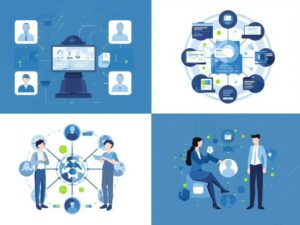
How AI Changes the Game
AI tools like CultureAmp, Lattice AI, and Officevibe now turn surveys into dynamic, evolving feedback systems.
They use natural language processing (NLP) to:
-
Analyze open-ended answers.
-
Detect emotional tone (sentiment analysis).
-
Generate reports with actionable insights.
Example Workflow:
-
Employees complete short, AI-generated micro-surveys.
-
Responses are analyzed instantly by Lattice AI.
-
ChatGPT creates summaries for HR:
-
“Top 3 employee pain points this quarter”
-
“Overall morale trend: positive → neutral”
-
Prompt Example:
“Summarize these employee comments into 5 key themes with positive and negative sentiment ratios. Suggest 3 actionable recommendations for HR leadership.”
Outcome:
Instead of static reports, HR teams receive live, ongoing insights — forming a feedback loop that constantly refines company culture.
5. Table: Top AI Tools for HR Automation
| Function | Tool | Core Feature | Time Saved | Best For |
|---|---|---|---|---|
| Resume Screening | HireVue, Manatal | AI resume parsing & ranking | 65% | Large applicant pools |
| Onboarding | Notion AI, Leena AI | Personalized onboarding plans | 55% | Remote employees |
| Feedback Loops | Lattice AI, CultureAmp | Sentiment analysis, dynamic surveys | 50% | Employee engagement |
| HR Analytics | ChatGPT + Tableau | Trend summaries & insight reports | 40% | People analytics |
| Automation | Zapier + Notion | Connects all HR data in one flow | 35% | Small HR teams |
6. Real-World Examples: AI in Action
Case 1: Tech Startup in Austin
A 15-person HR team used ChatGPT and Zapier to screen over 600 resumes for a customer success role.
Result: Time-to-hire reduced by 72%, and the hiring manager reported a 40% better candidate fit.
Case 2: Healthcare Provider in Florida
Implemented Leena AI to automate onboarding for nurses and medical assistants.
Saved over 12 hours per week in administrative onboarding work.
Case 3: SaaS Company in New York
Adopted CultureAmp’s AI sentiment analysis to understand team morale.
Detected burnout patterns early and reduced voluntary turnover by 18% within a year.
“Our HR didn’t get smaller — it got smarter.”
— HR Director, BrightHealth Tech, 2025
7. Ethics and Human Oversight in AI-Driven HR
AI is powerful — but HR is deeply human.
That means every automation must come with ethical oversight and transparency.
Key Risks & Solutions
-
Algorithmic bias:
→ Always anonymize resumes and include diverse data sources. -
Privacy concerns:
→ Use AI tools compliant with GDPR and EEOC standards. -
Over-automation:
→ Keep final hiring and performance decisions human.
ABA & SHRM Guidelines (2025) both stress a “human-in-the-loop” approach — AI assists, humans decide.
Practical Tip: Include an AI disclosure note in your company policy:
“We use AI-assisted tools for recruitment and feedback analysis to improve efficiency and fairness. All final decisions are made by humans.”
8. Common Mistakes to Avoid
-
Using public AI tools for confidential HR data – always choose enterprise-grade security.
-
Skipping bias testing – run quarterly audits on your AI tools.
-
Not training HR staff – AI tools are only as good as the users behind them.
-
Overreliance on automation – people still crave personal connection and empathy.
-
No integration plan – isolated tools create chaos instead of clarity.
9. FAQs
Is using AI for resume screening legal in the U.S.?
Yes, as long as your tools comply with EEOC regulations and you ensure human review before final decisions.
What’s the best AI tool for onboarding remote employees?
Tools like Leena AI and Zavvy offer automation plus personalization, ideal for remote or hybrid environments.
Can AI really reduce bias in hiring?
Yes — when properly trained, AI can anonymize resumes and standardize evaluation criteria, minimizing human bias.
How can small HR teams afford AI tools?
Start with affordable systems like ChatGPT + Notion AI + Zapier, which cover most workflows for under $100/month.
Does AI threaten HR jobs?
Not at all. It eliminates admin overload, letting HR professionals focus on culture, engagement, and strategy.

10. Conclusion
AI isn’t replacing HR — it’s redefining it.
For the first time, HR managers can shift from endless manual work to high-impact initiatives that actually improve employee experiences.
By automating resume screening, onboarding, and feedback loops, you free your time for what HR was always meant to do: understand, motivate, and empower people.
The future of HR isn’t robotic — it’s more human than ever, powered by smarter systems.