The global workforce has entered a new era—one shaped not by incremental change, but by rapid, disruptive transformation. In 2026, AI isn’t just a tool. It’s a catalyst reshaping industries, redefining job roles, and creating entirely new economic landscapes.
For some, AI feels like a threat.
For others, it’s the greatest opportunity of their lifetime.
But for most workers, the truth lies somewhere in between.
A factory worker in Germany now collaborates with AI-driven robots that handle precision tasks.
A teacher in India uses AI assistants to personalize lessons for 50 students at once.
A marketer in the U.S. works alongside creative AI engines to design campaigns in minutes instead of weeks.
The world of work is not being replaced—it’s being reimagined.
This article explores how AI in 2026 is transforming jobs through automation, creating new career paths, and driving the rise of hybrid human-AI teams.
The Acceleration of Automation: How AI Is Transforming Traditional Roles
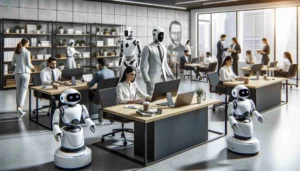
Automation is not new—but the speed, intelligence, and accuracy of automation in 2026 are unprecedented.
What’s different now?
Previous waves of automation replaced manual or repetitive tasks.
But AI-driven automation replaces cognitive tasks, including:
-
data processing
-
scheduling
-
customer service
-
quality control
-
forecasting
Top industries experiencing rapid automation in 2026:
1. Manufacturing & logistics
AI-driven robots now manage:
-
inventory checks
-
packaging
-
quality assessments
-
predictive maintenance
Human labor shifts from repetitive tasks to supervision, design, and optimization.
2. Retail & service industries
AI cashiers, smart checkout systems, and automated product recommendations reduce operational costs.
3. Finance and banking
AI models analyze financial risks faster and more accurately than human analysts.
4. Healthcare
AI handles scheduling, diagnostics, and even surgical planning.
The difference from 2023–2024?
Modern AI agents can:
-
plan
-
reason
-
adapt
-
learn
This means entire workflows can be delegated, not just individual tasks.
Automation is no longer about replacement—it’s about reallocation.
New Job Creation: The Emerging Roles Built for a Human-AI Future
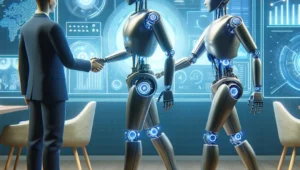
Despite fears of job loss, AI has created a new ecosystem of high-value roles. These didn’t exist five years ago—but in 2026, they’re becoming some of the most in-demand careers globally.
Here are the most influential AI-created jobs:
1. AI Workflow Designers
Professionals who build workflows where humans and AI collaborate effectively.
What they do:
-
map business processes
-
assign tasks to AI agents
-
optimize productivity
2. Prompt Engineers 2.0
Not just “prompt writers” but AI communication architects.
Their skills:
-
multimodal prompting
-
reasoning chain design
-
training AI for specific tasks
3. AI Ethics Reviewers
As AI becomes more embedded in society, ethical oversight becomes essential.
Responsibilities:
-
bias detection
-
transparency audits
-
safety compliance
4. Human-AI Collaboration Specialists
Experts who help organizations integrate AI into daily operations.
Focus areas:
-
employee training
-
hybrid workflow design
-
change management
5. Data Quality Curators
AI is only as good as the data it receives.
Tasks:
-
data cleaning
-
labeling
-
accuracy validation
6. Synthetic Data Engineers
AI-generated data is now used to train medical, financial, and industrial models.
Why these new jobs matter
They represent a shift from manual, repetitive labor to knowledge-driven, strategic roles.
AI doesn’t reduce the number of jobs—it changes which jobs matter.
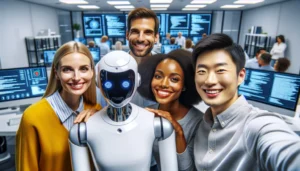
The Rise of Hybrid Human-AI Teams
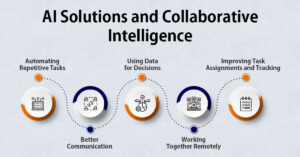

The future of work is neither fully automated nor fully human.
It is hybrid.
Hybrid human-AI teams combine the strengths of both:
Humans excel at:
-
creativity
-
critical thinking
-
emotional intelligence
-
ethical judgment
-
complex problem-solving
AI excels at:
-
speed
-
pattern recognition
-
automation
-
optimization
-
data analysis
Together, they create something far more powerful than either working alone.
Examples of hybrid teams in 2026:
1. Healthcare
Doctors make the final decisions, but AI:
-
analyzes scans
-
flags anomalies
-
predicts risks
2. Marketing
Creatives provide ideas; AI generates:
-
visuals
-
scripts
-
campaign frameworks
3. Programming
Developers design systems; AI writes code, tests bugs, and automates deployment.
4. Education
Teachers provide empathy and structure; AI personalizes curriculum.
5. Manufacturing
Humans manage safety + supervision; AI handles precision tasks.
This new structure reduces burnout and increases productivity—often by 30–50% in early studies.
Industries Being Transformed in 2026
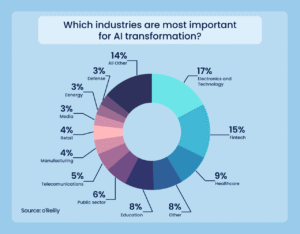
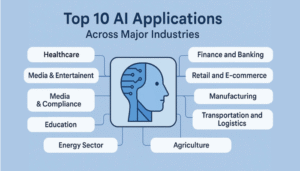
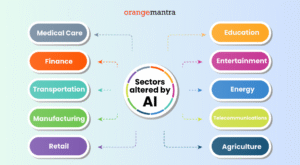
AI is not limited to one sector—it is reshaping entire global economies.
1. Healthcare
AI assists in:
-
diagnostics
-
drug discovery
-
predictive treatment planning
Doctors spend more time with patients, less time on paperwork.
2. Marketing & Advertising
AI creative engines generate:
-
concepts
-
videos
-
ads
-
campaign structures
Human marketers guide strategy and emotion.
3. Finance
AI performs:
-
fraud detection
-
portfolio optimization
-
market forecasting
Financial analysts become AI supervisors.
4. Education
AI tutors personalize learning for each student’s pace.
2026 classrooms blend:
-
digital companions
-
real teachers
-
smart content generation
5. Engineering
Engineers co-design with generative models.
Capabilities include:
-
blueprint generation
-
stress testing
-
simulation modeling
6. Logistics & Retail
AI manages supply chains:
-
real-time demand forecasting
-
smart restocking
-
autonomous delivery paths
The Skills Employees Need to Thrive in an AI-Driven Workforce
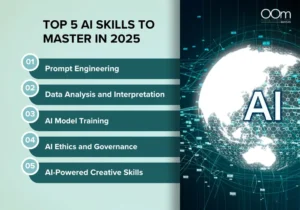
Thriving in an AI-powered world requires a new skill set.
Top skills for 2026:
1. AI Literacy
Understanding how AI tools work and how to use them effectively.
2. Critical Thinking
Because AI handles data—humans handle judgment.
3. Creativity
The one thing AI cannot replace.
4. Multimodal Prompting
Communicating with AI through:
-
text
-
images
-
voice
-
sketches
5. Emotional Intelligence
Essential for leadership, teaching, management, and caregiving roles.
6. Digital Ethics Awareness
Knowing how to use AI responsibly.
7. Continuous Learning Mindset
Because the workplace evolves monthly—not yearly.
Real-World Scenarios: How Workers Adapt to AI in 2026
Scenario 1 — The Teacher
A teacher uses AI to create lesson plans for students at different levels.
Result: More time for meaningful human interaction.
Scenario 2 — The Office Worker
AI handles scheduling, emails, and reports.
Humans focus on strategy.
Scenario 3 — The Engineer
An engineer collaborates with generative AI to design complex 3D parts.
Efficiency increases by 40%.
Scenario 4 — The Customer Support Agent
AI pre-filters customer queries and provides answer suggestions.
Humans handle empathy-driven issues.
Scenario 5 — The Small Business Owner
AI automates marketing, accounting, and customer communication.
Owners spend more time growing their brand.
Comparison Table: Traditional Workflows vs. AI-Enhanced Workflows
| Workflow Type | Before AI | After AI | Benefits | Human Role |
|---|---|---|---|---|
| Customer Support | Manual replies | AI drafts responses | Faster service | Emotional support |
| Teaching | One-size-fits-all | Personalized lessons | Better outcomes | Human mentorship |
| Marketing | Manual creation | AI creative engines | Higher speed | Strategic direction |
| Engineering | Manual modeling | AI simulation | Improved accuracy | Human oversight |
| Logistics | Manual tracking | AI forecasting | Lower costs | System supervision |
FAQ
1. Will AI replace all jobs?
No. It replaces tasks—not entire professions.
2. Which jobs are safest in 2026?
Creative, strategic, leadership, and human-centered roles.
3. What should workers learn right now?
AI literacy, multimodal prompting, critical thinking, and digital ethics.
4. Are hybrid human-AI teams really effective?
Studies show a 30–50% increase in productivity.
5. Will AI create more jobs?
Yes. But different types—requiring new skills.
Conclusion
The workforce of 2026 is not defined by fear—but by transformation.
AI is reshaping jobs, but it’s also reshaping possibilities.
It’s opening doors to new careers, empowering workers with enhanced capabilities, and making global industries more efficient and humane.
The future is not humans vs. AI.
It’s humans with AI.
Those who choose to adapt, learn, and collaborate with intelligent systems are already leading the next economic revolution.
The workforce is changing—dramatically.
But so are the opportunities.