Across the American Midwest, something extraordinary is happening. Fields once worked by large teams of seasonal laborers, long rows of farmhands, and aging machinery are now becoming testbeds for advanced AI systems, autonomous robots, and precision agriculture technologies. States like Iowa, Kansas, and Nebraska, known for their vast corn, soybean, wheat, and cattle farms, are experiencing a technological shift unlike anything since the introduction of diesel tractors in the early 20th century.
The reason is simple yet deeply structural:
manual labor in American agriculture is disappearing.
A severe labor shortage, rising operational costs, climate unpredictability, and the pressure to maximize yield have pushed U.S. farmers to adopt AI sooner than almost any other country. From autonomous tractors to AI-powered irrigation systems, from drone crop analysis to robotic harvesters, the Midwest is becoming the heart of America’s new agricultural revolution.
This article takes a deep, emotionally rich, and highly analytical look into:
-
how AI in American agriculture actually works
-
why Iowa, Kansas, and Nebraska are leading the charge
-
what kinds of robots are replacing manual labor
-
the benefits, risks, and long-term implications of this transformation
Let’s dive into the farms reshaping the future of food.
The State of American Agriculture: Why Labor Shortages Are Reshaping Farming
Agriculture in the United States is facing a generational crisis. More than half of American farmers are over 55, and younger generations are choosing different career paths. Seasonal migrant labor is declining, and wages continue to rise. According to USDA reports, the agricultural labor force has shrunk dramatically over the last decade — especially in corn, soybean, and wheat-producing states.
The Midwest Labor Shortage Problem
-
Fewer young farmers entering the field
-
Higher labor costs for planting and harvest seasons
-
Increased farm sizes requiring greater physical effort
-
Difficulty maintaining full-time staff in rural areas
-
Dependence on migrant workers who are now in shorter supply
Farmers in Iowa, Kansas, and Nebraska consistently report the same challenge:
“We don’t have enough people to work the fields — but the work must still get done.”
And so, they’re turning to machines.
AI-powered machines.
Autonomous machines.
Learning machines.
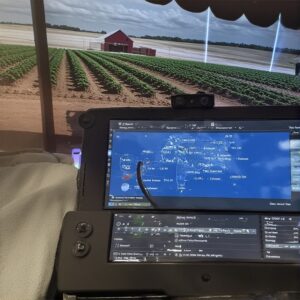
AI Technology on Midwest Farms: How Robots Are Changing the Fields
Modern American farms are no longer “traditional.” They are highly optimized, digital environments where robots, drones, sensors, and AI software work together to automate tasks once performed by dozens of workers.
Below are the most transformative AI technologies used across Iowa, Kansas, and Nebraska:
1. Autonomous Tractors (Self-Driving Farming Vehicles)
Companies like John Deere, headquartered near Iowa’s agricultural hubs, have developed tractors that:
-
navigate fields automatically
-
plant seeds with centimeter-level precision
-
avoid obstacles
-
optimize fuel consumption
-
operate day and night without human supervision
Farmers love them because:
-
they save massive labor costs
-
reduce fatigue and human error
-
increase planting accuracy
-
work in harsh weather
The idea of a tractor driving itself 24/7 sounded futuristic a decade ago. Today, it’s a reality in thousands of Midwest farms.
2. AI Planting Robots
These robots analyze:
-
soil quality
-
humidity
-
sunlight
-
nutrient levels
…and plant seeds in the most optimal pattern.
They make decisions in real time, learning from every season.
In Iowa’s mega farms, AI planting robots are replacing large planting teams, doing better work in less time.
3. AI Harvesting Machines
Harvesting corn, soybeans, and wheat is extremely labor-intensive.
Now robotic harvesters:
-
detect ripeness levels
-
determine ideal harvest timing
-
cut and collect plants with precision
-
minimize crop loss
A single AI harvester can replace up to 10 workers in peak season.
4. AI Weed Removal Robots
Weeds cost the U.S. billions of dollars every year.
AI weed removal robots:
-
scan fields with machine vision
-
identify weeds with 95% accuracy
-
eliminate them without destroying crops
Instead of spraying fields widely, these robots do spot micro-spraying, saving tons of chemicals.
5. Drone Automation
Drones equipped with thermal and multispectral sensors help farmers:
-
detect crop stress
-
measure soil moisture
-
identify disease
-
assess field health in minutes
A single drone flight replaces hours of manual inspection.
Kansas and Iowa lead the Midwest in drone adoption.
Iowa: The Heart of AI-Driven Corn & Soybean Farming
Iowa is America’s agricultural powerhouse, producing more corn than any other state. The state’s dependence on accurate planting and harvesting makes it an ideal candidate for AI modernization.
AI Transformations in Iowa
-
Autonomous tractors handle long planting rows without rest
-
AI irrigation systems reduce water usage by up to 40%
-
Drone-based field analysis detects disease early
-
Predictive AI helps determine optimal harvest timing
-
Soil-scanning robots create digital 3D maps of farmland
Farmers in Iowa report higher yields — not just from the ability to work faster, but because AI teaches them about their land in ways human eyes never could.
One Iowa farmer said:
“The drone sees things I never noticed in 20 years walking the fields.”
This is the strength of AI agriculture: clarity, precision, and insight.
Kansas: AI Robots Transforming Wheat, Cattle & Dryland Farming
Kansas is known as “The Wheat State,” but its agricultural landscape includes cattle ranches, dryland farms, and large-scale grain production. AI is playing a crucial role here.
1. AI in Wheat Farming
AI tools predict:
-
ideal planting days
-
water needs
-
nutrient deficiencies
-
pest risk
Precision farming algorithms reduce waste and increase yield consistency.
2. Cattle Monitoring With AI Sensors
Kansas ranchers use:
-
smart ear tags
-
heat detection sensors
-
AI-powered health scoring systems
These tools:
-
prevent disease
-
optimize feeding
-
reduce cattle loss
AI cameras in barns automatically monitor livestock behavior.
3. Dryland Farming Automation
Dryland farming is risky due to unpredictable rainfall.
AI helps by:
-
analyzing drought patterns
-
predicting soil moisture retention
-
suggesting drought-resistant crop strategies
Kansas farms adopting AI drought tools report fewer crop failures.
Nebraska: AI Robots in Irrigation, Corn Production & Livestock Automation
Nebraska leads America in AI-powered irrigation systems, thanks to its massive corn and soybean fields and extensive pivot irrigation networks.
1. AI-Controlled Pivot Irrigation
AI systems:
-
monitor soil moisture
-
track temperature changes
-
optimize water distribution
-
reduce waste during drought
Nebraska farms have seen 20–50% water savings after adopting AI irrigation.
2. Automated Feed Robots
Robotic feeders:
-
deliver feed on precise schedules
-
track consumption
-
monitor cattle weight
-
reduce human workload
This makes livestock operations more efficient.
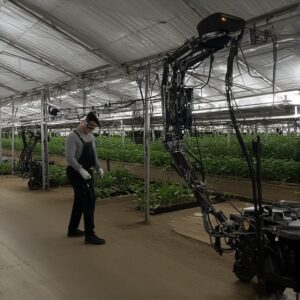
3. Climate-Aware Farm Automation
Nebraska faces major weather swings.
AI helps predict:
-
hailstorms
-
early frost
-
extreme heat
-
wind damage
Farmers can prepare earlier and reduce losses.
Benefits & Challenges: What AI Solves (and What It Cannot Fix) for U.S. Farmers
AI in American agriculture brings enormous benefits — but it also comes with real challenges.
Benefits
1. Labor Replacement
AI robots fill the gaps left by labor shortages, reducing dependence on seasonal workers.
2. Higher Yields
AI detects problems sooner and optimizes every stage of farming.
3. Lower Costs
Less waste → lower operation costs → higher profits.
4. Sustainability
AI irrigation and targeted spraying reduce resource use.
5. 24/7 Operation
Robots never get tired, sick, or distracted.
Challenges
1. High Upfront Costs
AI systems can cost tens of thousands of dollars.
2. Rural Internet Limitations
Large parts of the Midwest lack stable wireless connections.
3. Learning Curve
Older farmers struggle to adopt complex systems.
4. Overdependence on Technology
If systems fail during key seasons, consequences can be severe.
Comparing AI Usage Across Iowa, Kansas & Nebraska
| AI Technology | Iowa | Kansas | Nebraska |
|---|---|---|---|
| Autonomous Tractors | ⭐⭐⭐⭐⭐ | ⭐⭐⭐⭐ | ⭐⭐⭐⭐ |
| Drone Crop Monitoring | ⭐⭐⭐⭐⭐ | ⭐⭐⭐⭐ | ⭐⭐⭐ |
| AI Livestock Automation | ⭐⭐⭐ | ⭐⭐⭐⭐ | ⭐⭐⭐⭐⭐ |
| AI Irrigation Systems | ⭐⭐⭐⭐ | ⭐⭐⭐ | ⭐⭐⭐⭐⭐ |
| Weed Removal Robots | ⭐⭐⭐⭐⭐ | ⭐⭐⭐ | ⭐⭐⭐ |
Iowa leads in crop automation.
Kansas leads in cattle AI.
Nebraska leads in irrigation AI.
FAQ Section
1. How common is AI in American agriculture today?
AI adoption is rapidly increasing, especially in the Midwest where labor shortages are severe.
2. Do AI robots completely replace farm workers?
Not entirely — but they significantly reduce the need for seasonal and repetitive manual labor.
3. Which crops benefit most from AI?
Corn, soybeans, wheat, and large-scale livestock operations.
4. Are autonomous tractors safe?
Yes. They use multi-sensor systems to detect obstacles and avoid collisions.
5. Is AI too expensive for small farms?
While some tools are costly, drone systems and small mapping robots are becoming more affordable.
6. Do farmers trust AI recommendations?
Increasingly yes — because AI predictions are backed by real-time data.
7. What is the biggest challenge?
Rural internet access and the initial cost of machinery.

The Future of American Farming: AI, Automation & the New Agricultural Revolution
The future of farming in America is not in the distant horizon — it’s sprouting in the fields today. The vast lands of Iowa, Kansas, and Nebraska are proving that AI is not merely a tool but a partner, a labor force, a strategist, and in many ways, a guardian of the nation’s food supply.
AI-powered tractors till the soil.
Robots plant the seeds.
Drones watch the skies.
Algorithms predict the harvest.
Sensors protect the livestock.
This is not the end of farming — it is the rebirth of it.
A future where farmers work with AI, not against it.
A future where machines handle the heavy lifting while humans make smarter decisions.
A future where agriculture becomes sustainable, efficient, and resilient.
And it’s happening right now in the heart of America.