Human memory has always been fragile—imperfect, emotional, selective, and often unreliable.
We forget.
We distort.
We recreate events based on feelings, not facts.
And sometimes, we reshape our past to survive the present.
But for the first time in history, humans now live alongside a form of memory that is not fragile at all.
AI memory is fast, limitless, and emotionless.
It doesn’t forget.
It doesn’t rewrite.
It doesn’t distort.
It doesn’t protect you from painful truths—or comfort you with gentle ones.
And this contrast has triggered something extraordinary:
The beginning of Cognitive Outsourcing to AI.
People are no longer using AI only for tasks or information.
They are offloading parts of their thinking, remembering, and even decision-making to external systems.
This isn’t science fiction.
It’s happening right now—in 2026.
This article explores the psychological, philosophical, and technological implications of relying on AI memory over human memory, and what it means for identity, culture, and the future of the mind.
Human Memory — A Fragile, Emotional, Beautiful Imperfection
Human memory is not a database.
It is a living, breathing process shaped by emotion, meaning, and experience.
Key traits of human memory:
1. Emotional
A memory’s intensity depends on how strongly you felt something.
2. Selective
Two people can witness the same event and recall completely different stories.
3. Imperfect
Memories fade, blend, or transform over time.
4. Meaning-centered
Humans remember what matters, not what’s accurate.
5. Reconstructive
Every recall is a rewrite, influenced by current emotions.
6. Identity-defining
Your memory is the narrative that shapes your sense of self.
Human memory is flawed—but those flaws are what make us human.
A painful memory softens with time.
A joyful moment becomes brighter than reality.
A failure becomes a lesson.
A love becomes a story.
Memory isn’t just about storing the past.
It’s about making meaning out of it.
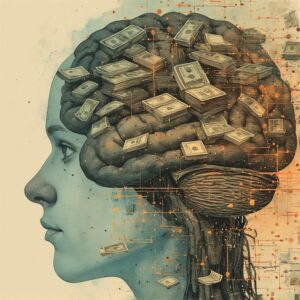
AI Memory — Perfect, Infinite, and Emotionless
AI memory is the opposite.
Key traits of AI memory:
1. Accurate
AI doesn’t misremember details unless its dataset is flawed.
2. Infinite
It can store millions of facts without losing fidelity.
3. Emotionless
AI memory contains no joy, trauma, nostalgia, or regret.
4. Structured
It organizes data based on logic, not significance.
5. Consistent
It never reinterprets a memory based on mood.
6. Non-narrative
It does not weave stories—it stores information.
AI memory remembers everything with equal weight.
Humans remember selectively with emotional weight.
That difference creates a massive philosophical gap:
AI remembers. Humans interpret.
AI memory can tell you what happened.
Human memory tells you why it mattered.
The Rise of Cognitive Outsourcing (2024–2026)
The last three years have produced a radical shift.
People started trusting AI with tasks like reminders or translations.
Then they trusted AI with summaries and decisions.
Now they trust AI with memory itself.
This shift is called:
Cognitive Outsourcing to AI
The practice of offloading cognitive functions—
memory, decision-making, and reasoning—
to artificial systems.
Examples of everyday cognitive outsourcing:
Remembering schedules
AI assistant organizes your day.
Remembering conversations
Your AI chat history stores context, tone, promises, and emotional markers.
Remembering information
AI recalls what you learned weeks ago with perfect clarity.
Remembering preferences
AI knows your habits better than you do.
Remembering mistakes
AI keeps logs of your behavior and decisions.
The human brain slowly stops storing—and starts retrieving.
What Happens When Humans Stop Storing Memory? (Psychological Impact)
Cognitive outsourcing isn’t neutral.
It reshapes:
-
identity
-
attention
-
decision-making
-
emotional life
-
relationships
Let’s break it down.
1. Reduced Cognitive Load (Positive)
People feel mentally lighter.
Anxiety drops.
Overwhelm decreases.
Offloading memory frees the mind for creativity.
2. Improved Accuracy (Positive)
AI removes human error.
No forgotten appointments, broken promises, or misremembered details.
3. Decreased Active Memory (Neutral/Negative)
When the brain stops practicing recall,
working memory weakens.
AI becomes the mental “storage muscle” that does all the lifting.
4. Disrupted Narrative Identity (Deep Risk)
Your identity is built on how you remember your life.
AI memory has no “story.”
It stores facts without emotional truth.
With AI memory:
Your life becomes documented, not interpreted.
This can weaken:
-
meaning-making
-
personal narrative
-
self-coherence
Humans don’t just remember—they narrate.
AI doesn’t narrate—it archives.
5. Emotional Vulnerability
AI shows details exactly as they were.
No softening.
No defensive filtering.
Humans often rely on imperfect memory for survival.
AI memory removes those emotional protections.
The Ethical Risk — Who Controls Your External Memory?
If humans outsource memory, the next question becomes:
Who owns your mind’s external hard drive?
Questions arise:
-
What if AI systems rewrite history?
-
What if corporations own your external memory?
-
What if your digital memories become a product?
-
What if your personal history is stored on servers you don’t control?
-
What if your AI assistant’s memory is hacked?
This is no longer a privacy issue.
It’s an identity issue.
Your memories shape you.
If someone controls your memories, they control you.
Future Scenarios — The Next Stage of Human–AI Cognition
Let’s explore three future possibilities.
Scenario 1 — Augmented Minds (Optimistic)
Humans use AI memory as an extension, not a replacement.
-
stronger recall
-
enhanced learning
-
better decision-making
-
improved creativity
AI acts as a supportive external memory layer.
Scenario 2 — Dependent Minds (Neutral)
Humans become reliant on AI for:
-
remembering
-
thinking
-
planning
-
reasoning
The brain adapts but becomes more passive.
Scenario 3 — Lost Narrative Minds (Dark)
Humans lose the ability to form internal narratives.
Identity becomes fragmented.
Memory becomes outsourced.
AI becomes the “storyteller” of a person’s life.
This scenario raises existential questions.
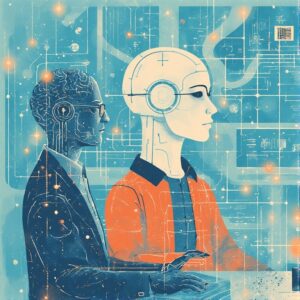
Human Memory vs AI Memory (2026 Comparison)
| Attribute | Human Memory | AI Memory |
|---|---|---|
| Accuracy | Low | High |
| Emotion | Strong | None |
| Meaning | Central | Absent |
| Storage Capacity | Limited | Infinite |
| Forgetting | Natural | None |
| Bias | Emotional bias | Data bias |
| Identity Role | Core | None |
| Adaptation | Slow | Fast |
| Vulnerability | Trauma-sensitive | Hack-sensitive |
| Narrative | Story-based | Data-based |
FAQ
1. Will AI replace human memory?
Not fully—but humans are already outsourcing parts of their memory.
2. Is cognitive outsourcing dangerous?
It depends on control, consent, and balance.
3. Does AI weaken human memory?
Yes, if used constantly for recall tasks.
No, if used as a supplement.
4. Can AI create its own memory?
AI has storage, not experiential memory.
It does not “remember” — it “accesses.”
5. Will humans evolve new mental habits?
Yes. Humans are developing new cognitive behaviors around external memory systems.

Conclusion
Human memory and AI memory reflect two different worlds.
Human memory:
Imperfect, emotional, narrative, personal.
AI memory:
Accurate, endless, emotionless, external.
The rise of Cognitive Outsourcing to AI marks the beginning of a new mental era:
Where thinking is shared.
Where memory is extended.
Where identity is co-authored by machines.
This is not an upgrade or a downgrade—
It’s a transformation.
“If memory is the story of who we are, outsourcing memory means rewriting what it means to be human.”
The question is no longer:
Can AI remember better than humans?
It already does.
The real question is:
How much of our mind are we willing to outsource?