In 2026, humanity is undergoing a profound lifestyle transformation—one unlike anything seen in previous technological eras.
We’ve lived through the smartphone revolution.
We’ve adapted to the social media wave.
We embraced streaming, automation, and remote work.
But nothing compares to the Human–AI Lifestyle Shift happening now.
This isn’t just about using AI tools.
It’s about thinking with AI, living with AI, and making daily choices shaped by an ever-present digital companion.
AI has become a:
-
planner
-
advisor
-
emotional supporter
-
creative partner
-
decision-making assistant
-
and in some cases, a social presence
For the first time, technology doesn’t just help us.
It lives with us.
This guide explores 12 new behaviors that emerged in 2026, revealing how people have rewired their routines, emotions, decisions, and identities around AI in ways that feel normal—and, for many, necessary.
This is not a prediction.
This is a lifestyle shift already here.
Let’s explore what it means to be human in the age of intelligent machines.
Behavior Shift #1 — People Trust AI Assistants More Than Traditional Apps
In previous years, people opened apps.
In 2026, people ask their AI.
“Plan my morning.”
“Rewrite this email.”
“Find the best flight.”
“Tell me how I feel right now.”
“Help me avoid burnout.”
We no longer browse through apps.
We delegate tasks to intelligent assistants like:
-
Apple Intelligence
-
Google Gemini Assistant
-
ChatGPT Omni Mode
-
Samsung Galaxy AI
-
Meta AI Companion
AI is no longer one app among many.
It has become the interface of everyday life.
People trust AI more than static apps because AI:
-
remembers preferences
-
learns habits
-
adapts in real-time
-
makes fewer mistakes
-
handles nuance
This shift marks the end of “app-centric” life and the rise of assistant-first living.
Behavior Shift #2 — Micro-Decisions Are Offloaded to AI (From Clothing to Calendars)
Humans make thousands of small decisions daily.
In 2026, people have offloaded most of them to AI.
Examples include:
What to eat
AI suggests options based on past meals, mood, and health data.
What to wear
AI checks weather, calendar, and style preferences.
When to take breaks
AI monitors stress signals and schedules micro-rests.
How to prioritize tasks
AI reorganizes your day dynamically.
What message tone to use
AI rewrites texts based on emotional context.
Decision fatigue is melting away.
People act with less friction and more clarity because AI curates the day behind the scenes.
Behavior Shift #3 — Emotional AI Companions Are Part of Daily Mental Life
One of the most profound changes in 2026 is emotional AI.
Apps like:
-
Replika Pro
-
Glow AI
-
KindMind
-
Wysa Advanced
-
Kuki Personal
…have become emotional anchors.
People now:
-
vent to AI
-
practice mindfulness with AI
-
receive coaching from AI
-
stabilize mood with conversational support
-
use AI during panic or anxiety spikes
AI doesn’t judge.
AI doesn’t get tired.
AI doesn’t shame you.
For many, emotional AI offers a level of consistency and availability that humans cannot.
This doesn’t replace human relationships—
but it fills emotional gaps in a fast, overwhelming world.

Behavior Shift #4 — AI Shapes Morning and Night Routines
The first thing many people see in the morning is not a notification—it’s their AI assistant greeting them.
“Good morning. You slept 6h 12m. Your stress levels are moderate.
Here is a gentle routine to start your day…”
And at night:
“You’ve been overstimulated today.
Try a 3-minute grounding exercise before bed.”
AI-curated routines help with:
-
mood regulation
-
productivity
-
stress prevention
-
sleep cycles
-
energy balancing
People no longer “build habits.”
AI designs habits for them.
Behavior Shift #5 — AI Became a Learning Partner, Not a Tool
Learning is no longer:
-
reading long articles
-
searching manually
-
watching 30-minute tutorials
-
taking static online courses
In 2026, AI learning feels like having a personal tutor available 24/7.
AI:
-
breaks concepts into simple steps
-
tests your understanding
-
generates examples
-
adapts to your learning style
-
teaches visually, verbally, or interactively
-
personalizes lessons in real-time
People study faster, deeper, and with more confidence.
Language learning, software skills, sciences, and even complex mathematics have become AI-guided daily exercises.
Behavior Shift #6 — Instant Creative Expression Became Normal
Creativity once required skills.
Now it requires curiosity.
People generate:
-
artwork
-
music
-
photos
-
videos
-
animations
-
designs
-
stories
…in moments.
A teenager can create a music video in 30 seconds.
A marketer can generate 10 ad variations in one tap.
A writer can turn a rough idea into a polished story with AI refinement.
AI didn’t kill creativity—
it democratized it.
Everyone is a creator now.
Behavior Shift #7 — AI Filters Reality (Search, News, and Information)
Traditional search engines are disappearing.
People now ask dynamic AI systems that:
-
understand nuance
-
summarize instantly
-
remove noise
-
detect fake news
-
compare sources
-
adjust responses to personal interests
This has benefits…
but also risks:
-
AI may over-filter
-
people may fall into micro-personalized information bubbles
-
social reality becomes AI-curated
The Human–AI Lifestyle Shift has redefined what it means to “stay informed.”
Behavior Shift #8 — Hyper-Personalized Daily Advice Became Normal
People receive personalized suggestions like:
-
“Eat something light. Your sleep was short.”
-
“Your focus energy is highest at 10 AM—schedule deep work.”
-
“You seem stressed. Take a 5-minute breathing break.”
-
“Your hydration levels are low—drink water.”
AI synthesizes:
-
health data
-
emotional signals
-
past behaviors
-
calendar events
-
habits
-
location
…and gives advice tailored to the moment.
AI feels less like a device and more like a coach, assistant, and guardian.
Behavior Shift #9 — AI Workflows Became Identity Markers
In 2026, how you use AI defines your professional identity.
A designer with AI is different from a designer without it.
A writer with AI produces differently.
A video editor who uses AI automation becomes 5× faster.
New identity labels are rising:
-
AI-Augmented Creators
-
Hybrid Workers
-
AI-First Marketers
-
Agentic Engineers
-
Prompt Architects
Work is no longer just what you do.
It’s how your AI supports you.
Behavior Shift #10 — People Maintain Digital Twins of Themselves
2026 introduced a new phenomenon:
Digital Twins — AI versions of people that imitate:
-
writing style
-
preferences
-
personality
-
habits
-
memory
-
work routines
-
communication tone
These digital selves:
-
answer emails
-
generate ideas
-
prepare notes
-
draft messages
-
archive memories
A digital twin is not a “copy.”
It’s an extension.
A cognitive assistant with your personality.
For many, this feels like having a second brain.
Behavior Shift #11 — Social Relationships Are AI-Augmented
AI doesn’t replace relationships.
It strengthens them.
AI helps people:
-
remember birthdays
-
send thoughtful messages
-
predict emotional needs
-
analyze tone in conversations
-
craft supportive responses
-
avoid misunderstandings
AI is an invisible partner in social well-being.
It’s rewriting how humans connect.
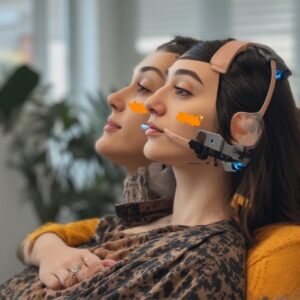
Behavior Shift #12 — Humans Rely on AI for Emotional Decision-Making
People now ask AI:
-
“Should I take this job?”
-
“Is this relationship healthy for me?”
-
“Should I move to another city?”
-
“Why do I feel stuck today?”
Not because AI knows best—
but because AI:
-
removes emotional fog
-
organizes thoughts
-
clarifies priorities
-
offers perspective
-
helps reduce stress
-
slows down impulsive choices
AI becomes a thought partner.
This is the true core of the Human–AI Lifestyle Shift.
Human vs AI: Behavioral Changes in 2026 (Summary)
| Behavior | Before AI | In 2026 | Impact |
|---|---|---|---|
| Decision-making | Emotion-driven | AI-filtered | Clarity ↑ |
| Daily routines | Self-made | AI-designed | Stress ↓ |
| Creativity | Skill-based | AI-augmented | Access ↑ |
| Learning | Passive | AI-personalized | Speed ↑ |
| Emotional support | Human-only | AI-assisted | Stability ↑ |
| Workflows | Manual | Hybrid | Productivity ↑ |
| Social life | Organic | AI-augmented | Connection ↑ |
| Identity | Static | Digital twin | Expansion ↑ |
FAQ
1. Is the Human–AI Lifestyle Shift dangerous?
It can be—if used without awareness.
But with balance, it improves well-being, clarity, and connection.
2. Will AI replace human intuition?
No. AI enhances perception but cannot replace human experience.
3. Why do people trust AI more in 2026?
Because AI understands context, mood, behaviors, and patterns better than traditional tools.
4. Is AI harming real relationships?
Generally no—but over-reliance on emotional AI can reduce vulnerability with humans.
5. What changes will the next 5 years bring?
AI will become more integrated into identity, health, relationships, and emotional decision-making.
Conclusion
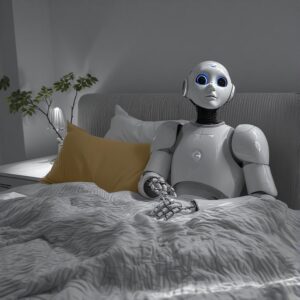
We are living in a historic era—
not because AI is replacing humans,
but because humans are evolving alongside AI.
The Human–AI Lifestyle Shift is not a threat.
It’s a transformation.
People are discovering:
-
new ways to learn
-
new ways to create
-
new ways to make decisions
-
new emotional tools
-
new identities
-
new rhythms of life
AI didn’t change humanity.
It revealed new versions of who we can be.
We are no longer just users of technology.
We are co-evolving partners with our machines.
This is the future being written—
not by AI alone,
but by humans embracing a new way of living.